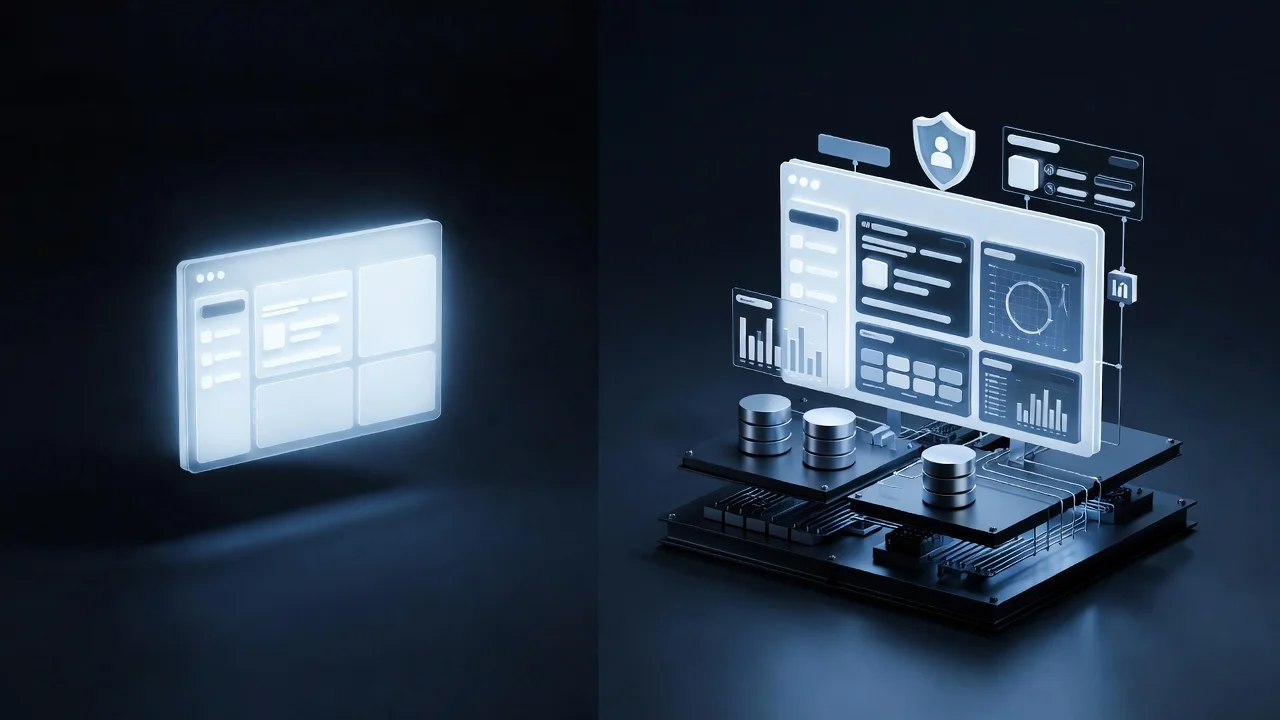
AI and no-code tools make it easier than ever to build early prototypes. That speed is valuable, but many demos fail when real users, real data and real reliability expectations enter the picture. This guide explains what needs to change before launch.
Why production is different from a demo
- Real users expose edge cases: Demo flows are usually optimistic. Production usage includes incomplete input, inconsistent behavior and unexpected traffic patterns.
- Data consistency becomes critical: If your schema and data boundaries are weak, growth quickly turns into migration pain and operational instability.
- Security cannot be postponed: Production requires clear auth boundaries, permission logic, auditability and defensible handling of sensitive workflows.
- You need observability by default: Without logs, alerts and traces, teams react too late and spend time guessing instead of resolving incidents.
Production checklist (practical)
- Authentication and role model: Define who can access what and ensure privileged actions are explicit, logged and testable.
- Data model and migrations: Prepare a safe migration strategy so schema changes can ship without downtime or data loss.
- Error handling and fallback behavior: Design for API failures, timeouts and service degradation before users encounter them.
- Logging, monitoring and alerting: Make incidents visible early with actionable telemetry and ownership per critical flow.
- CI/CD and release process: Use repeatable deployments so releases are safe, predictable and less dependent on manual heroics.
- Performance baseline: Test key flows under load to avoid surprises when user volume increases.
What we do in a Productionization Sprint
Our Productionization Sprint is designed for founders with a working prototype. In 2-4 weeks we audit, stabilize and ship a production baseline with clear technical ownership and next-step backlog.
Signals your prototype is not production-ready yet
If deployments are manual, error handling is inconsistent, role management is unclear or no one trusts release quality, your product needs productionization before scale.
What good looks like after productionization
A production-ready baseline means predictable releases, fewer incidents, clearer ownership and a roadmap that can move forward without recurring technical firefighting.
Already have a prototype and want to make it real?
If you already have a prototype, this is often the highest-leverage step before investing in broader growth.
Next step for your product
If this article matches your current phase, these pages will help you decide what to build next and how to do it without avoidable technical debt.